
Teething can make an otherwise settled baby suddenly seem clingy, restless or determined to chew everything within reach. It is a normal stage of development, but it is also easy to blame every new symptom on teeth. Knowing the usual baby teething signs and remedies helps you soothe genuine discomfort while recognising when something else may be going on.
Most babies begin teething at around 6 months, although some start before 4 months and others after their first birthday. The timing varies widely, so the calendar matters less than the pattern of symptoms and what you can see or feel along the gums.
Common teething symptoms in babies
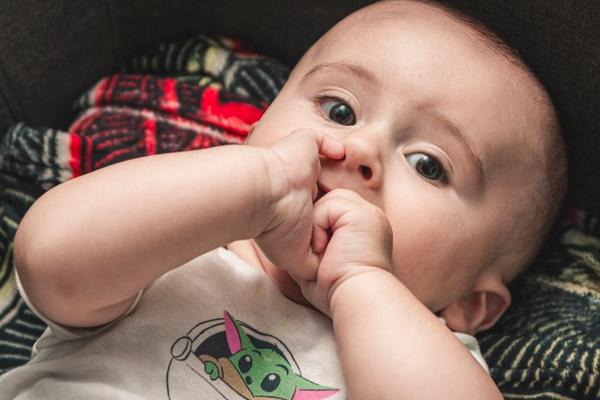
Typical teething symptoms baby may show include sore or red gums where a tooth is coming through, more dribbling than usual, chewing or gnawing on fingers and toys, increased fretfulness and disturbed sleep. Some babies rub an ear or develop one flushed cheek. A dribble rash can also appear around the mouth or chin because the skin stays damp.
A baby’s temperature may be slightly raised during teething, but NHS guidance describes this as below 38C. A true fever, persistent diarrhoea, repeated vomiting or a baby who seems significantly unwell should not simply be put down to teething. There is no good evidence that teething itself causes diarrhoea.
When do babies start teething?
The first teeth often appear at around 6 months, usually the lower front teeth. Upper front teeth tend to follow, with other incisors, molars and canines appearing over the next couple of years. Most children have all their milk teeth by about age 2 to 3.
The order is only a rough guide. An early or late first tooth can still be normal. If you are concerned about your baby’s development or teeth, speak to your health visitor, dentist or GP rather than comparing your child too closely with another baby of the same age.
Simple teething relief to try first
Offer a chilled teething ring
A teething ring gives your baby something safe to chew and can help distract from sore gums. Some rings can be chilled in the fridge according to the manufacturer’s instructions. Do not put a teething ring in the freezer, because a frozen ring can damage delicate gums. Never tie one around a baby’s neck.
Massage the gums gently
Wash your hands and gently rub the sore area with a clean finger. Light pressure can be soothing, especially when a tooth is close to breaking through. Stop if your baby becomes more upset or the gums appear injured.
Use suitable foods for older babies
If your baby is 6 months or older and has started weaning, cool soft fruit such as melon can be soothing. Supervise closely whenever your baby eats because of choking risk. Avoid sugary biscuits and rusks as a teething solution; frequent sugar exposure can contribute to tooth decay from the moment teeth begin to appear.
What about pain relief and teething gels?
If your baby is clearly uncomfortable, NHS advice says sugar-free paracetamol may be used for babies aged 2 months or older and ibuprofen from 3 months, provided the medicine is suitable for the child. Always follow the product instructions and check with a pharmacist, GP or NHS service if you are unsure about the correct medicine or dose.
For teething remedies UK parents may see many gels, powders and tablets online. NHS guidance recommends trying non-medicine approaches such as teething rings first because evidence that teething gels work is limited. General oral pain-relief gels are not suitable for young children. If you are considering a teething gel, use only a product specifically intended for children and ask a pharmacist for advice.
Homeopathic teething products are not recommended by the NHS. Unlicensed products bought online are particularly difficult to assess for safety and quality.
A practical routine for a difficult teething evening
Imagine your 7-month-old is drooling heavily, chewing toys and becoming irritable before bedtime, but is feeding reasonably well and has no fever. Start with a chilled teething ring while you prepare the bedtime routine. Wipe the chin gently to keep the skin dry, then massage the gum with a clean finger for a short time. Keep the evening calm and offer cuddles or play for distraction.
If discomfort remains significant, check whether an age-appropriate painkiller is suitable and follow the instructions carefully. The useful part of this routine is that it moves from simple comfort measures to medicine only when needed, while still watching for symptoms that do not fit ordinary teething.
When teething may not be the whole story
Parents often encounter teething at the same age that babies pick up minor infections, start new foods and experience sleep changes. That overlap can make it tempting to explain everything as teeth.
Seek medical advice when symptoms are causing concern, especially if your baby has a temperature of 38C or higher, appears unusually sleepy or difficult to wake, is struggling to breathe, is not feeding normally, has fewer wet nappies, has persistent vomiting or diarrhoea, or has a rash that worries you. In the UK, NHS 111, a GP or another appropriate health service can advise based on the symptoms.
Protect the first teeth from the start
Once the first milk tooth comes through, begin brushing twice a day with a small, soft toothbrush and a smear of fluoride toothpaste. NHS guidance for children under 3 recommends toothpaste containing at least 1,000 ppm fluoride. Brush last thing at night and on one other occasion.
Reducing frequent sugary foods and drinks is also important. Teething may be temporary, but the habits that begin around the first tooth can shape dental health for years.
Frequently asked questions
How long do teething symptoms last?
Discomfort often comes and goes around the time an individual tooth is emerging. Some babies have only mild symptoms for a few days, while others are unsettled more noticeably. Teething is not usually a reason for a baby to remain seriously unwell.
Can teething cause a high fever?
Teething may be associated with a slight temperature rise, but a temperature of 38C or above should not automatically be blamed on teething. Consider other causes and seek medical advice when appropriate.
Is extra drooling a sign of teething?
Yes, increased dribbling is common during teething. Gently wiping the face and chin can help reduce skin irritation from constant moisture.
Can teething cause diarrhoea?
There is no evidence that teething itself causes diarrhoea. If your baby has diarrhoea, especially if it is persistent or accompanied by other concerning symptoms, consider another cause and seek medical advice when needed.
Keep teething in perspective
Teething can be uncomfortable, but it is usually manageable with simple measures. Look for the familiar pattern of sore gums, chewing, dribbling and mild fussiness; start with safe physical comfort such as a chilled ring or gentle gum massage; and use medicines only when appropriate. Just as importantly, do not let teething explain away a fever or a baby who seems genuinely ill. That balance gives your child comfort without missing signs that deserve medical attention.